
Entropia
Conception: Andreas Balaouras, Christina Gyftaki
Direction: Andreas Balaouras
Text: Lila Pantelidou, Andreas Balaouras
Music: Marios Apostolakoulis
Video-Photography: Stratis Argyrakis
Performer: Christina Gyftaki
Production: TerrArte
The performance Entropia was presented at Theatre T, Thessaloniki, Greece from 27 February to 08 March 2026 and at The Cockpit theatre, London, UK on 29 March, 2025 .
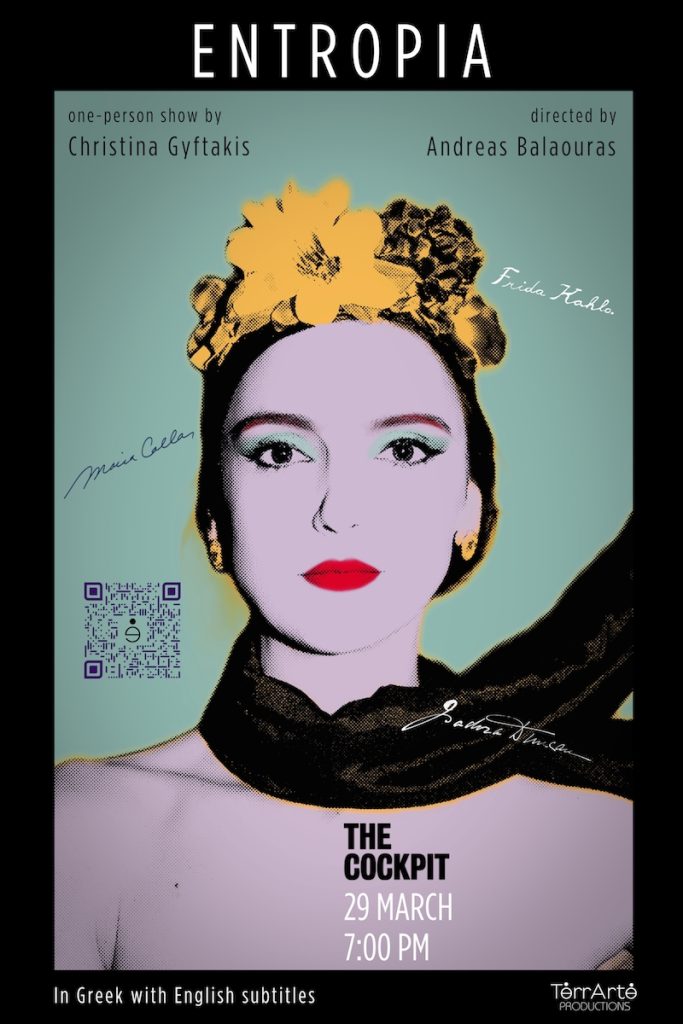
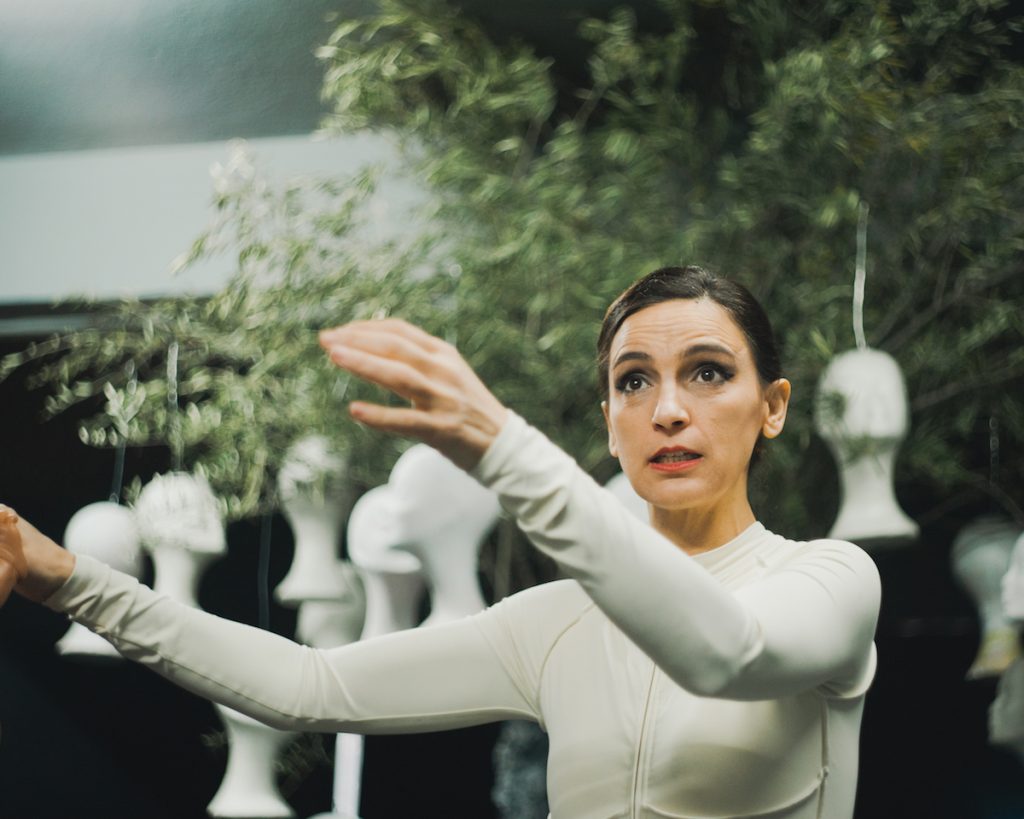
Entropia is a solo performance with visual interventions and movement codes structured on the triangular theory of love and the simulation of thermodynamic entropy in humans.
The work is inspired by three important female figures from the world of arts. Isadora Duncan, Frida Kahlo and Maria Callas themselves and their lives create a triangle whose each side represents a different art form. Each one, in some way, changes her art or influences it to a significant degree. Three priestesses: one dances, another paints and another sings.
Entropy is an irreversible state that occurs when a closed system declines and begins to dissolve, and there is no way to reunite the pieces (R. Smithson). It is the concept through which disorder is measured; its maximum value reflects complete disorganization and equates to the cessation of evolution or, in other words, the cessation of life.
The performance Entropia identifies the progressive decay and decomposition of the three artists, inventing a gaze that attempts to expose the deceleration as a result of their superior connection to their art and detaches them from historical time as archetypal women (– artists).
In the work, the presence of the mother is critical. The mothers of the artists converse with the needs and frustration of their children. On the other hand, Isadora, Frida and Maria monologue their bitterness about the male figure in their lives, the experience of motherhood and their fate within their art.
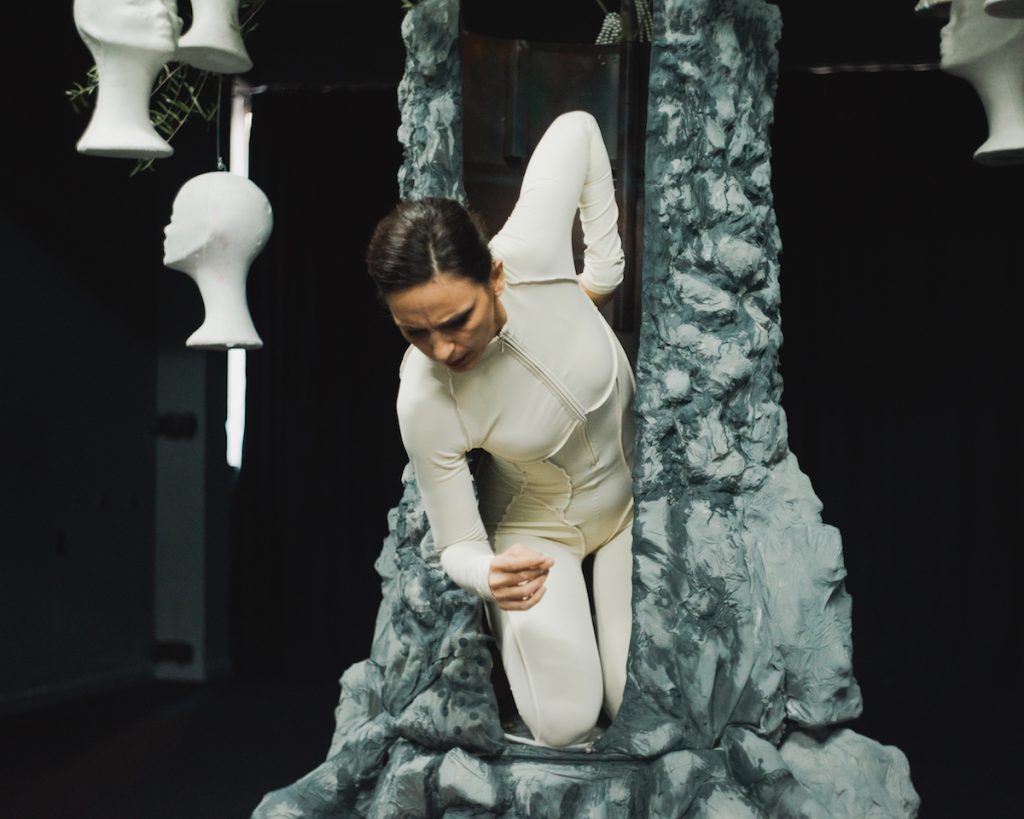
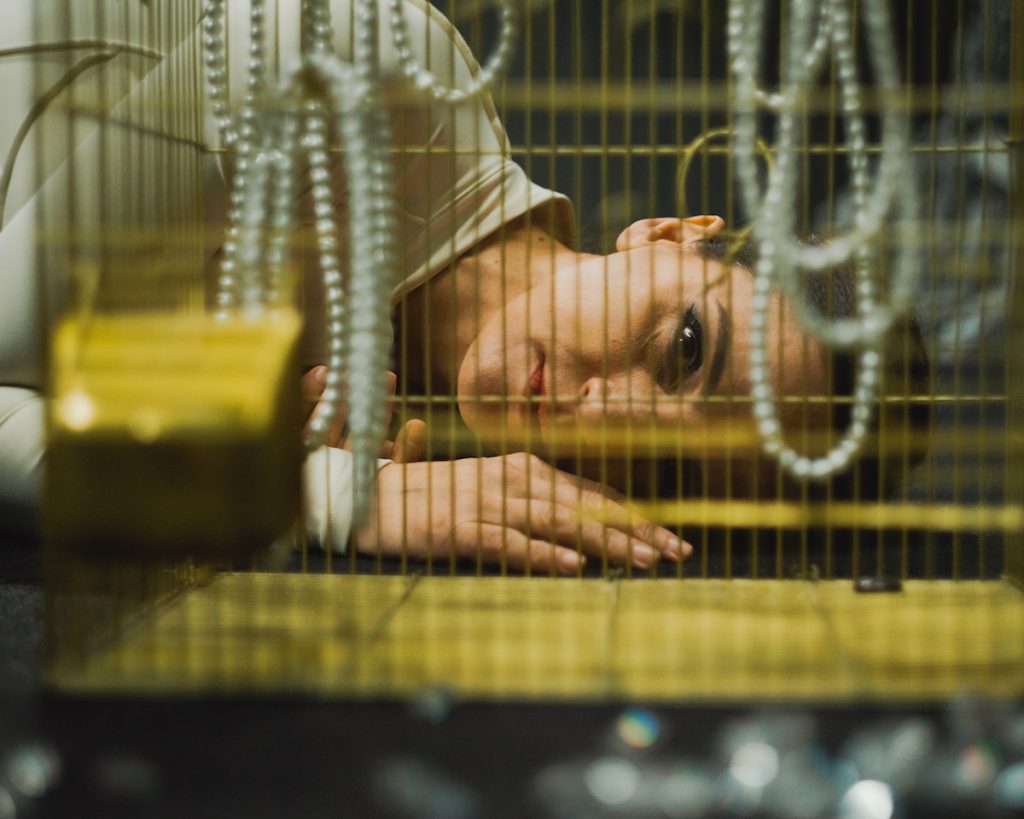
Three scenic elements define the different worlds with the common final emotion. A scarf, a corset and a bird, a core.
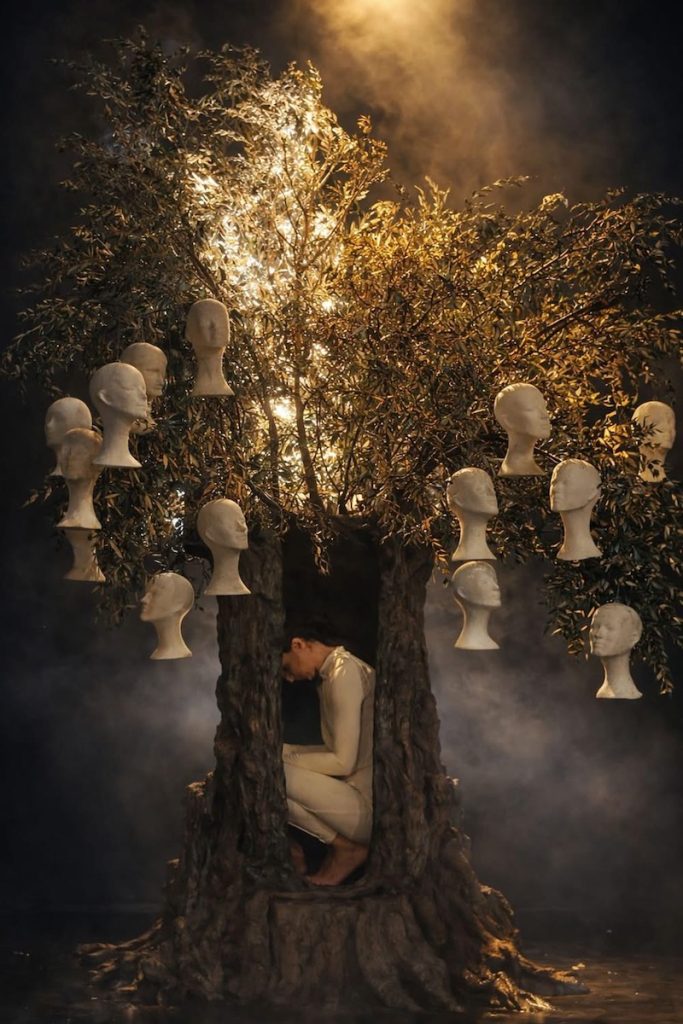
“I like clouds. Because when they feel it, they cry and shed rain. Because they don’t need to run away, fall to their knees to beg, run to hide. They fly freely. And if they get bored with this sky, they seek another. And they change shapes, and they crumple. They don’t hurt. They fly!”
Description
Maria Callas, Frida Kahlo and Isadora Duncan lived in different eras and their contribution to their art was undoubtedly influenced by the sociopolitical developments and conditions that prevailed then. However, they were defined not only by their era but also by their family environment. Their mothers played a decisive role in shaping their character, as well as their artistic identity.
The three of them share some common paths and experiences:
They experienced love in various manifestations. Intense love, romantic love, companionate love, empty love and even ‘non-love’, while they were defined by an incomplete love. With the components of intimacy, passion and commitment and their interaction, they loved and were loved, and their derivatives determined their lives.
The performance Entropia is not a biography of these three legends. Entropia isolates important details from the lives of these women. Their passions and their weaknesses. Details that defined them, but also many other women of everyday life in every generation.
The work is a reflection on female audacity in life. A common monologue about passions and mistakes, about temporal reality and social stereotypes that define social identity and intervene in shaping becoming. It treats the past as present and the present as future.

